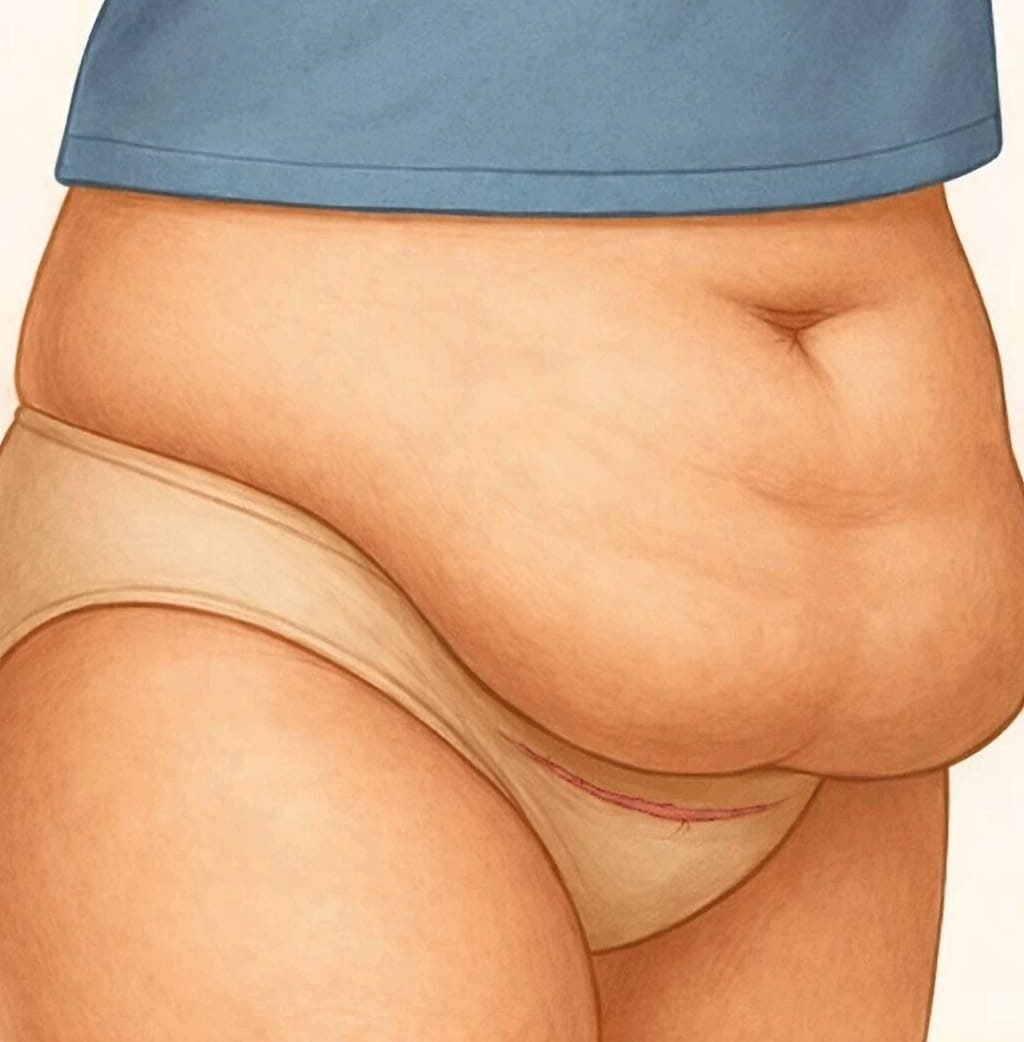
⚠️ The Cesarean Section “Flap”: Why That Extra Lower-Belly Skin Sometimes Remains After C-Section 🩺🤰
After a cesarean section, many women notice a small “pouch,” “fold,” or soft overhang of skin on the lower abdomen. Online, it is sometimes called a “C-section flap” or “C-section shelf.” While it may look surprising or frustrating, it is actually a very common and medically explainable change in the body after pregnancy and surgery.
Let’s understand what it really is, why it happens, and what can help improve its appearance over time.
A cesarean delivery is a surgical procedure known medically as Cesarean Section.
 1. What People Call the “Flap” Is Actually Skin and Tissue Change
The so-called “flap” is not a separate medical condition. It is usually a combination of:
- Stretched abdominal skin
- Subcutaneous fat (fat under the skin)
- Post-surgical healing changes
- Muscle separation after pregnancy
During pregnancy, the abdomen expands significantly. After delivery, the skin does not always return fully to its original tightness.
 2. Why It Happens After Pregnancy
Pregnancy places extreme pressure on the abdominal wall:
- The uterus expands many times its normal size
- Skin stretches rapidly over months
- Abdominal muscles are pushed apart
- Hormonal changes affect skin elasticity
After birth, especially after a C-section, the body must heal both internally and externally, which can leave a visible fold of tissue in the lower abdomen.
 3. The Role of Surgery and Healing
A cesarean section involves an incision through several layers of tissue, including skin and abdominal muscles.
Because of this:
- Scar tissue forms during healing
- Skin may heal unevenly over the incision area
- Mild swelling or tissue shifting can occur
This combination can contribute to the appearance of a “shelf” or fold above the scar.
4. Muscle Separation (Diastasis Recti)
One important factor is a condition called Diastasis Recti.
What happens:
- The two abdominal muscle groups separate during pregnancy
- They may not fully return to their original position
- This weakens core support
Result:
- The lower belly may protrude slightly
- The skin may appear looser or folded
This is very common after pregnancy, not just C-sections.
 5. Why Some Women Have More Noticeable Changes Than Others
The appearance of a C-section flap varies due to several factors:
Genetics
Skin elasticity differs from person to person.
Number of pregnancies
Multiple pregnancies can increase stretching.
Weight changes
Rapid weight gain or loss affects skin tightening.
 Age
Age
Skin naturally loses elasticity over time.
 Activity level
Muscle tone plays a role in abdominal shape.
6. Is It Dangerous?
No—this is generally not a medical problem.
It is:
- A cosmetic or structural change
- Not an infection or disease
- Not harmful to internal organs
However, some women may experience emotional discomfort due to body image changes, which is completely valid.
 7. Can It Improve Over Time?
Yes, in many cases it can improve gradually.
Helpful approaches include:
 Gentle core strengthening
Exercises recommended after medical clearance can help strengthen abdominal muscles.
 Healthy nutrition
Supports skin repair and weight stability.
 Regular movement
Helps overall muscle tone and circulation.
 Scar care (if advised by doctor)
Can improve scar appearance and skin texture.
 8. When to Consult a Doctor
It is important to seek medical advice if you notice:
Pain or swelling at the scar site
- Hard lumps under the incision
- Severe abdominal weakness
- Bulging that worsens over time
In some cases, complications like hernias or severe Diastasis Recti may require evaluation.
9. Emotional Impact Matters Too
Many women feel self-conscious about post-pregnancy body changes. This is normal and widely experienced.
However, it is important to remember:
- These changes are a natural result of pregnancy and birth
- They reflect the body’s ability to carry and deliver a child
- They do not define health, beauty, or strength
Support and understanding play a big role in recovery.
 Final Thoughts
The so-called “C-section flap” is not a mystery or a defect—it is the natural result of skin stretching, muscle changes, and surgical healing after a Cesarean Section.
In many cases, it is influenced by factors like skin elasticity and Diastasis Recti, and it often improves gradually with time, movement, and proper care.
The key message is simple:
 It is common It is not dangerous And it is part of a natural postpartum healing process
Because the body after pregnancy is not “damaged”…
It is simply transformed by one of the most powerful processes in human life.