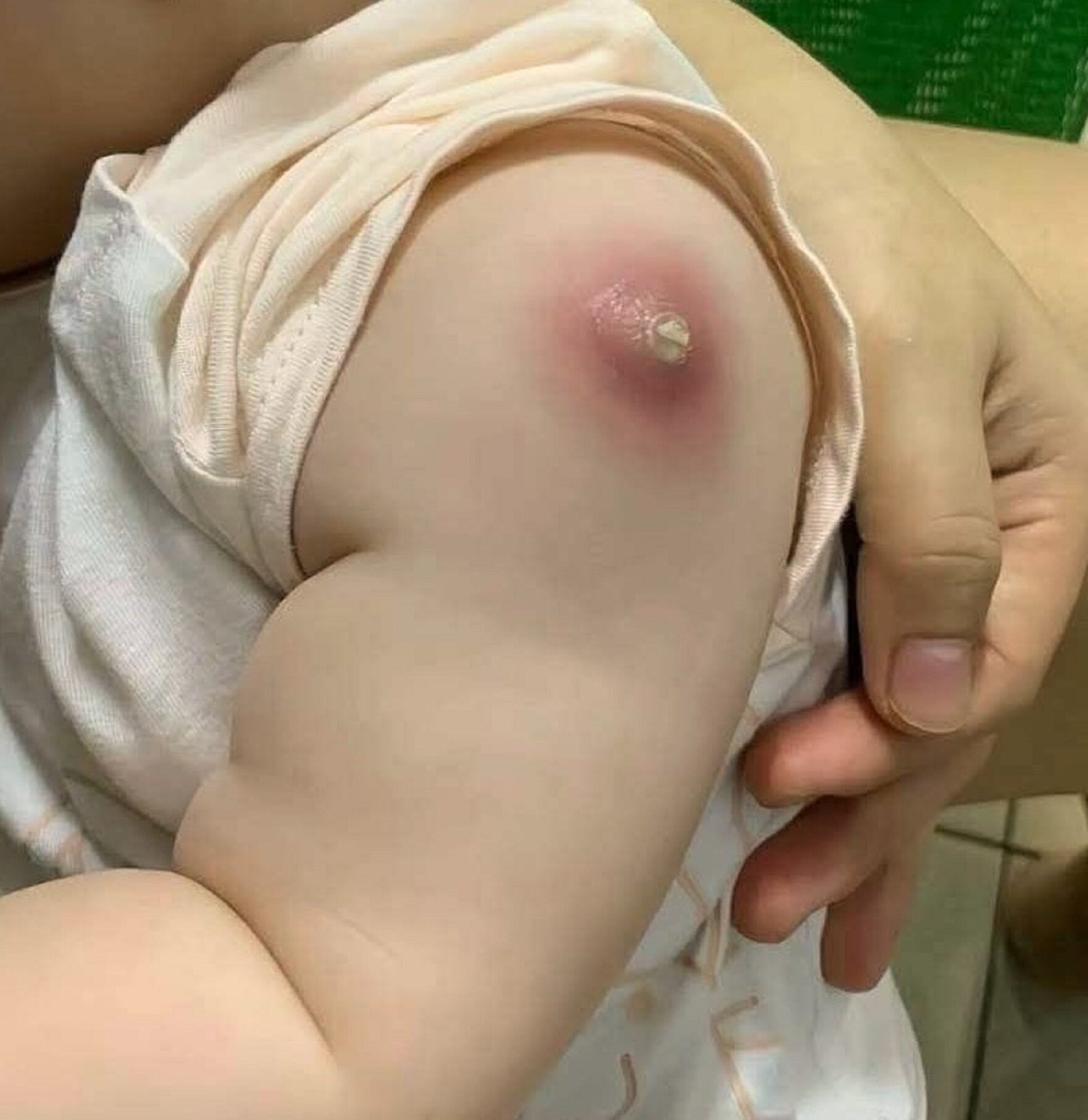
⚠️ Warning: Red Swelling After a Vaccine? What Parents Should Know Before Panicking… See More 👇
Vaccines are one of the most important tools in protecting children from serious diseases. However, it’s not uncommon for parents to notice redness, swelling, or a small lump at the injection site afterward. Sometimes the area may even look inflamed or develop a small pus-like spot, which can be worrying at first glance.
In most cases, these reactions are temporary and harmless, but it’s important for parents to understand what is normal and when medical attention might be necessary.
Why Do Some Children Develop a Lump or Redness After Vaccination?
After a vaccine is injected, the body’s immune system begins to recognize and respond to the vaccine components. This immune response is what helps the body build protection against diseases.
According to the Centers for Disease Control and Prevention and the World Health Organization, mild reactions at the injection site are very common and expected.
These reactions can include:
-
Redness around the injection site
-
Mild swelling or firmness under the skin
-
Tenderness or soreness
-
A small bump that may last a few days
These symptoms usually resolve within a few days as the immune system completes its response.
When a Small Pus-Like Bump Appears
In some cases, children may develop what looks like a small pimple or pus-filled bump at the vaccination site.
Possible explanations include:
1. Local Immune Reaction
Sometimes the immune system creates a localized inflammatory response, causing redness and swelling. The body may form a small collection of fluid that resembles pus but is part of the healing process.
2. Sterile Abscess
A sterile abscess can occur when the body reacts strongly to a vaccine component. Unlike infections, sterile abscesses do not contain bacteria and often heal without antibiotics.
3. Normal Reaction to Certain Vaccines
Some vaccines—such as the BCG vaccine used for tuberculosis—are expected to create a small pustule or ulcer that later forms a scar.
This reaction is considered normal and even expected with that specific vaccine.
Symptoms That Are Usually Normal
Most post-vaccine reactions are mild and should gradually improve. Typical symptoms include:
-
A red area smaller than 5–7 cm
-
Mild swelling or firmness
-
Slight warmth
-
Mild pain when touched
-
Symptoms lasting 2–5 days
According to the Mayo Clinic and the National Institutes of Health, these reactions show that the immune system is actively building protection.
Warning Signs Parents Should Not Ignore
While most vaccine reactions are harmless, certain symptoms should prompt a visit to a doctor.
Watch for:
-
Rapidly spreading redness
-
Severe swelling or hard lump
-
High fever
-
Persistent pus drainage
-
Increasing pain
-
The area getting larger instead of smaller
-
Child appearing unusually tired or irritable
These symptoms may indicate a possible infection or abscess that requires medical evaluation.
Helpful Tips to Care for the Injection Site
Parents can help their child feel more comfortable by following simple care steps.
 Apply a Cool Compress
Place a clean, cool cloth on the area for 10–15 minutes to reduce swelling.
Keep the Area Clean
Gently wash with mild soap and water if needed.
Encourage Gentle Arm Movement
Moving the arm can help reduce soreness and stiffness.
Use Pain Relief if Recommended
Doctors may suggest age-appropriate pain relievers if the child is uncomfortable.
Always follow guidance from your child’s healthcare provider before giving medication.
When to Contact Your Pediatrician
You should consider contacting a doctor if:
-
The swelling lasts longer than a week
-
The lump becomes hard or larger
-
Your child develops fever or worsening symptoms
Doctors can examine the area and determine whether it is a normal immune reaction or something that needs treatment.