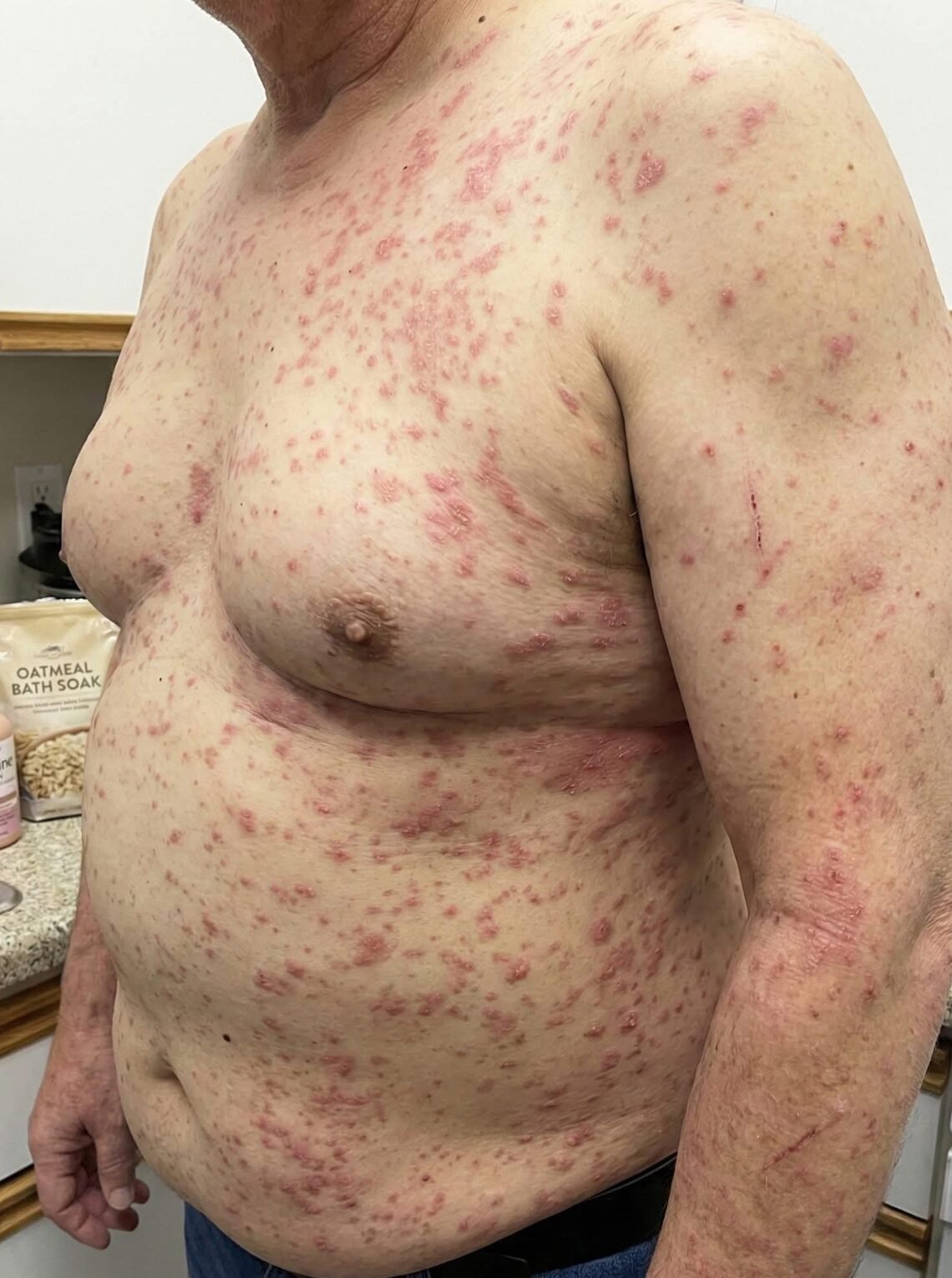
😟 My 63-Year-Old Father Started Itching All Over… Then His Face Swelled and a Rash Appeared 😱 What Could This Mean
It started with something that didn’t seem too serious — just a bit of itching. At first, my 63-year-old father mentioned feeling uncomfortable, especially around his arms and scalp. We assumed it was something simple like dry skin, maybe a reaction to weather changes or a new soap.
But within days, things began to escalate in a way we never expected.
The First Warning Signs
The itching became more intense — not just in one spot, but all over his body. He described it as persistent and almost unbearable, especially at night. Sleep became difficult, and no over-the-counter creams seemed to help.
Then came the swelling.
One morning, we noticed his face looked noticeably puffy, particularly around the eyes and cheeks. It was alarming. Although the swelling subsided slightly after a day, it left us concerned. Something clearly wasn’t right.
And then, just when we thought it might be improving… a new symptom appeared.
The Rash That Changed Everything
Small red dots began to spread across his skin. At first, they were faint and scattered. But within 24–48 hours, they became more visible and widespread — appearing on his arms, chest, back, and even parts of his legs.
The itching intensified alongside the rash, creating a cycle of discomfort that seemed impossible to break. At this point, it was no longer something we could ignore.
What Could Be Causing These Symptoms?
When symptoms like full-body itching, facial swelling, and a spreading rash appear together, medical experts say it could point to several possible conditions — some mild, others more serious.
Here are some of the most common explanations doctors consider in situations like this:
1. Allergic Reaction (Urticaria or Angioedema)
One of the most likely causes is a severe allergic reaction.
- The itching and rash may be hives (urticaria)
- The facial swelling may be angioedema, a deeper swelling under the skin
Triggers can include:
- New medications
- Certain foods (nuts, shellfish, dairy)
- Environmental allergens (pollen, dust, chemicals)
Even something as simple as a new detergent or lotion can cause a delayed reaction.
2. Drug Reaction
If your father recently started a new medication, this is especially important.
Drug reactions can cause:
- Widespread rash
- Severe itching
- Swelling of the face or lips
Some reactions can become serious if not addressed quickly, especially in older adults.
3. Skin Conditions or Infections
Certain skin conditions can cause widespread itching and rash, such as:
- Eczema
- Contact dermatitis
- Fungal or viral infections
However, the combination with facial swelling makes these less likely as the sole cause, though still possible.
4. Liver or Kidney Issues
Surprisingly, internal organ issues can sometimes show up as skin symptoms.
- Liver problems can cause intense itching without obvious rash at first
- Kidney issues may also lead to skin irritation and discomfort
These conditions are more common in older adults and should not be overlooked.
5. Autoimmune or Systemic Conditions
In some cases, symptoms like these may point to an underlying immune system disorder, where the body reacts against itself.
These conditions may start with vague symptoms like rash and itching before becoming more noticeable.
When Should You Be Concerned?
While some rashes are harmless, certain signs indicate that immediate medical attention is needed:
 Rapid or severe facial swelling Difficulty breathing or swallowing Rash spreading quickly across the body Fever or fatigue along with the rash Symptoms not improving after a few days
In your father’s case, the combination of intense itching + swelling + widespread rash is enough to justify urgent medical evaluation.
What Doctors Usually Do
When visiting a healthcare provider, they may:
- Perform a physical examination
- Ask about recent medications, foods, or exposures
- Order blood tests to check liver, kidney, and immune function
- Prescribe antihistamines or corticosteroids to reduce the reaction
- In some cases, recommend allergy testing
Early diagnosis can prevent complications and bring relief faster.
What You Can Do Right Now
While waiting for medical evaluation, here are a few steps that may help reduce discomfort:
 Avoid any new products or foods that may have triggered the reaction Use gentle, fragrance-free skincare products Keep the skin cool and hydrated Avoid scratching to prevent infection Consider over-the-counter antihistamines (if safe and approved by a doctor)
A Wake-Up Call About Hidden Symptoms
This situation is a powerful reminder that symptoms we often ignore — like itching — can sometimes be early warning signs of something more serious.
Our bodies don’t always communicate loudly at first. Sometimes, they start with subtle signals that gradually escalate. Paying attention early can make all the difference.
For us, what started as a simple itch turned into a concerning chain of symptoms that required immediate attention. And while we’re still waiting for a full diagnosis, one thing is clear: it’s always better to act early than to wait and hope it goes away.
Final Thoughts
If you or a loved one experiences symptoms like these, don’t ignore them. Even if they seem mild at first, patterns matter — especially when multiple symptoms appear together.
Health issues don’t always follow a predictable path, and early action can prevent complications.