Photographer who painted elephant pink before it died reacts to claims of cruelty
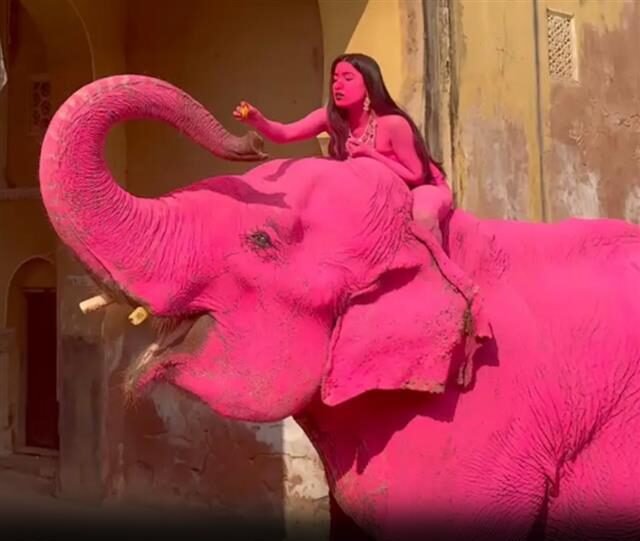
A photoshoot featuring an elephant painted entirely pink has triggered global outrage after the animal later died. The photographer has been accused of cruelty as she defends her controversial “art” and jokes online about “How I killed an elephant.”

In November 2025, Russian photographer Julia Buruleva staged a photoshoot at an abandoned Ganesha temple in Jaipur, India, featuring a model and an elephant both painted in a bold, solid shade of pink.
Sharing the images on social media, Buruleva explained that she had spent six weeks in the city, drawing inspiration from Jaipur’s pink color palette and cultural symbolism for the project she called her “Art Expedition.”
‘Pink City’
“Elephants are everywhere there – streets, ornaments, architecture. Practically the main symbol of Rajasthan. I just couldn’t pass by without including one,” the traveling art photographer wrote on Instagram, explaining the photos were intended to reflect the visual identity of Jaipur, often referred to as the “Pink City.”
The images show a near-nude model covered in bright pink pigment posing on top of the elephant, who was painted in the same vivid hue from head to toe.
According to the Independent, the elephant featured in the photoshoot was a 65-year-old female named Chanchal, who lived in Hathi Gaon, also known as Elephant Village. Her owner, Shadik Khan, told the outlet that Chanchal was used for rides but had retired at the time of the shoot.
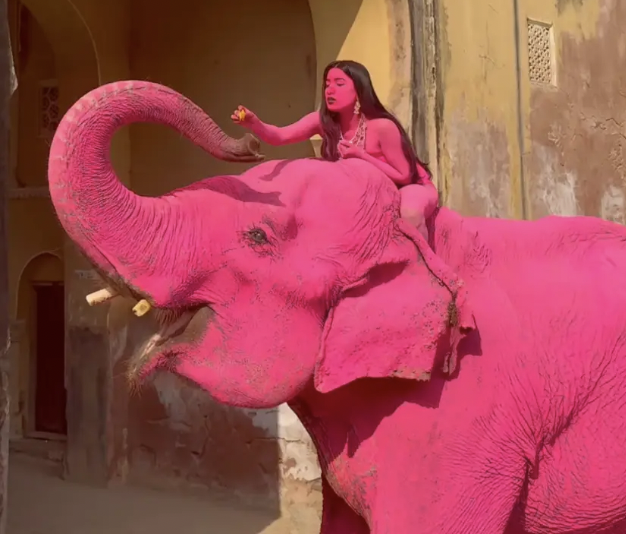
Buruleva’s photos were originally published in December but resurfaced a few months later, quickly spreading across social media and triggering heated debate.
Pink elephant
“For anyone worried about the elephant – we used organic, locally-made paint, the same kind locals use for festivals, so it was absolutely safe for the animal,” Buruleva insisted in her post about painting Chanchal, who reportedly was “calm, relaxed and responsive” during the shoot.
Confirming her claims, Ballu Khan, president of the Hathi Gaon committee, told the Independent the elephant was colored using gulal, a powder traditionally used during Holi celebrations, and that the substance was washed off shortly after being applied.
In February 2026 – months after the November photoshoot – Chanchal, considered advanced aged for an elephant, died from what officials said was natural causes.
‘Chanchal wasn’t a canvas’
Following Chanchal’s death, the backlash was harsh and immediate, with critics accusing the photographer of prioritizing art over animal welfare.
“This is not art, this is pure ANIMAL ABUSE and so not ok to glorify it,” one netizen wrote in the comment section of Buruleva’s Instagram post.
Another shared: “It’s really unfortunate how this can be perceived as anything close to art at the cost of a sentient being. Regardless of how/why Chanchal passed away, that treatment by the apparent artist is abysmal at the very least…Just going to go ahead and report the account for animal abuse because that’s what it is.”
A local added, “Hey Julia, I love that you loved our city to showcase your art. Next time please don’t paint the elephant. Colours being organic or what not.”
Others also criticized the concept, writing: “Chanchal wasn’t a canvas…she was a life. Paint, fashion, and ‘art’ should never come at the cost of someone’s suffering. This is not beauty, this is cruelty. Do better. Choose compassion.”
‘Decorating elephants’ common in area
Buruleva defended her work, arguing that much of the backlash has been fueled by misunderstandings about the process.