
SAD! B-2 Spirit was shot down to!
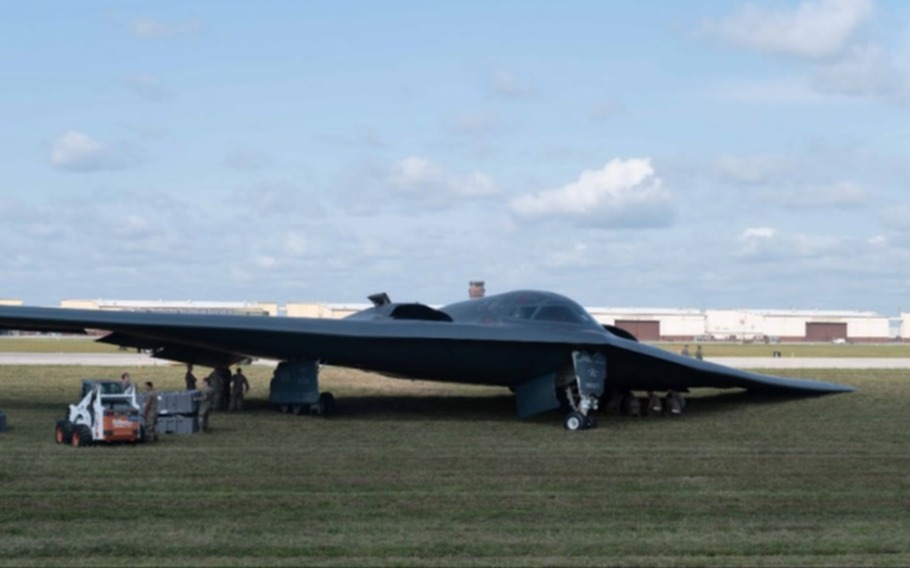
The B-2 Spirit exists in a category of its own—an aircraft wrapped in secrecy, engineering brilliance, and a reputation for near-invisibility. Over the years, countless rumors, conspiracy theories, and whispered stories have circulated about one being shot down, often fueled by misunderstandings or misreported events. But across three decades of service, no credible evidence has ever confirmed a B-2 being destroyed by enemy fire. What has happened are a handful of rare crashes—tragic, costly, and thoroughly investigated, but never the result of hostile action.
Understanding the B-2’s true operational history means looking closely at the few incidents we know about and the technology that has kept the aircraft nearly untouchable in hostile skies.
The most significant event involving the aircraft happened on February 23, 2008, at Andersen Air Force Base in Guam. It was early morning when the massive flying wing began its takeoff roll, a routine departure that spiraled into disaster within seconds. Unknown to the flight crew, moisture had seeped into the aircraft’s air data sensors—critical components responsible for feeding the flight computer precise information about speed, angle of attack, and other essential parameters.
When those sensors delivered corrupted data, the onboard computers reacted as if the aircraft was flying differently than it actually was. The B-2 rotated far too early, lifting off before reaching the necessary speed. As the engines strained and the aircraft clawed at the air, it stalled—a deadly situation for any plane, but catastrophic for one as huge and aerodynamically unconventional as the Spirit. Within moments, gravity won. The aircraft plunged back onto the runway and burst apart. Flames engulfed the wreckage.
Miraculously, both pilots ejected in time and survived. But the aircraft was gone—one of the most advanced machines ever built, lost to a mistake born of faulty data and a vulnerability no one had fully anticipated. The investigation later determined that neither pilot had committed an error. Instead, the tragedy was rooted in a software logic failure and the way the aircraft responded to incorrect sensor inputs. This marked the first time a B-2 had ever been destroyed, and its price tag—an estimated $1.4 billion—made the loss one of the most expensive aviation accidents in history.
Another serious incident unfolded years later, on September 14, 2021, at Whiteman Air Force Base in Missouri. That day, a B-2 suffered a crash landing that still remains only partially explained. Details released publicly were minimal, but what is known is that mechanical or technical issues occurred during landing, leading the aircraft to veer off the runway and sustain substantial structural damage. Once again, rumors quickly circulated—claims of enemy interference, cyberattacks, or a secret shootdown—none of which withstood scrutiny. The Air Force confirmed that no hostile action or external threat was involved.
The truth was simpler: even the world’s most advanced aircraft can suffer failures, and even with immense redundancy, things can go wrong.
These incidents illustrate something important. The B-2 Spirit, despite being designed for penetrating the most dangerous airspace on Earth, is still a machine—complex, sensitive, and unforgiving when systems fail. But when it comes to being shot down, the facts remain unchanged: no adversary has ever successfully brought one down. And there are compelling reasons why that is.
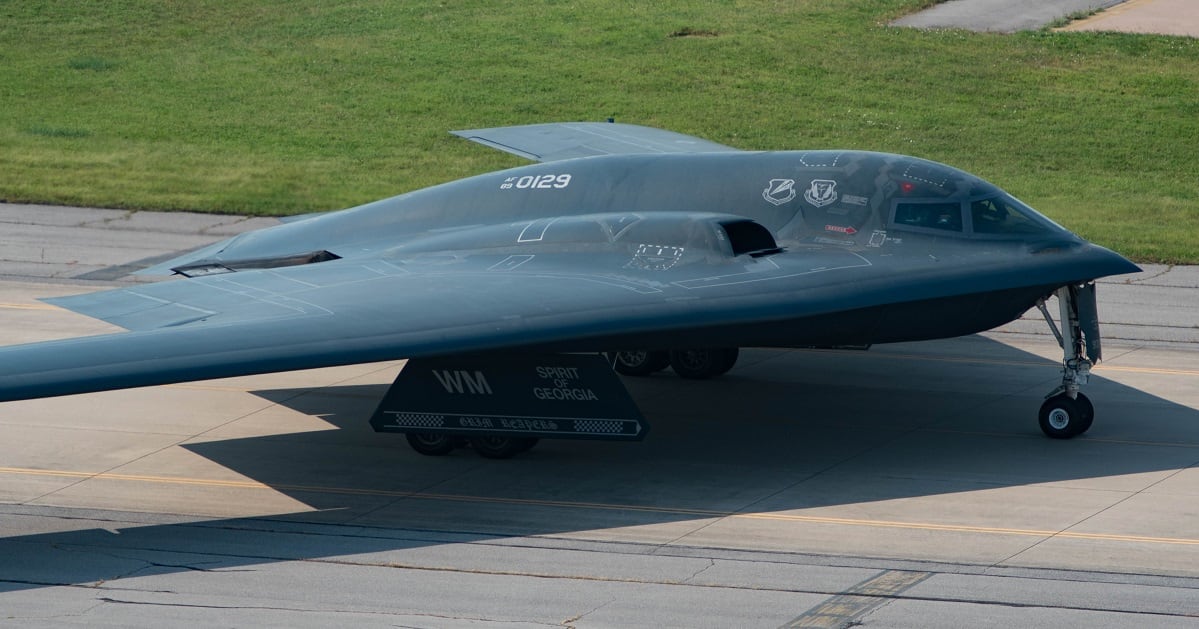
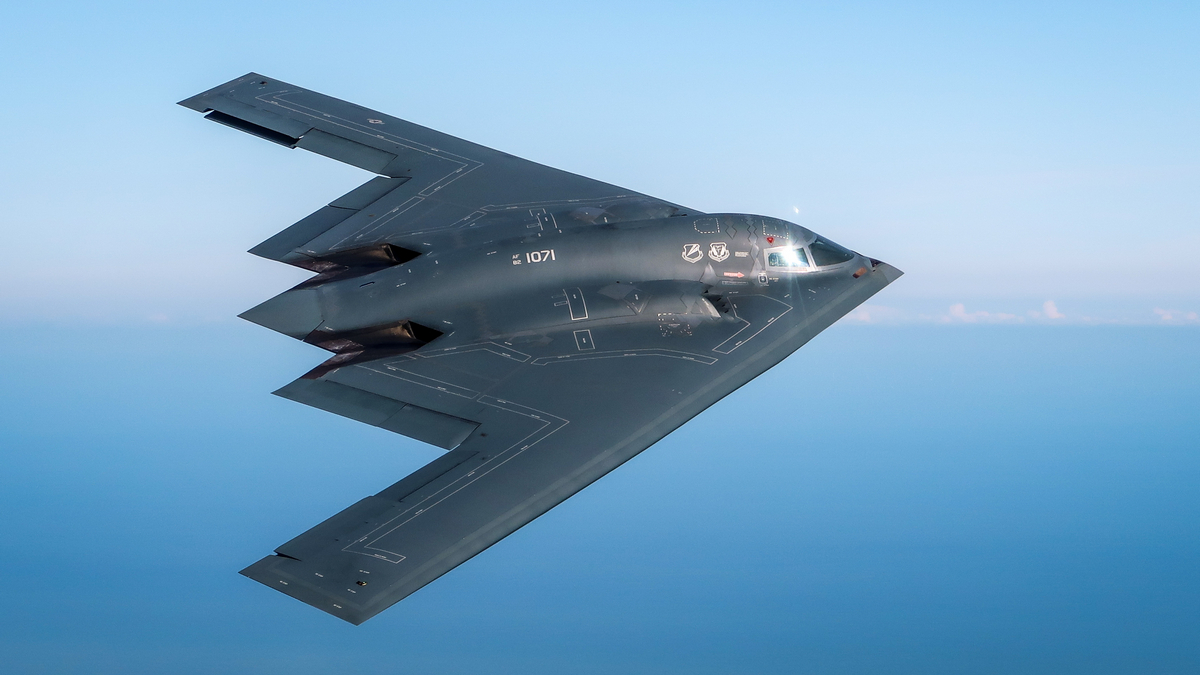
The B-2’s design begins with its iconic flying wing shape—a silhouette engineered explicitly to scatter radar waves instead of reflecting them. Conventional aircraft create large radar signatures due to vertical stabilizers, protruding engines, or uneven surfaces. The B-2 has none of that. Its smooth, flowing surfaces reduce detection dramatically. Combined with radar-absorbing materials baked into the skin of the aircraft, its radar cross-section becomes comparable to that of a small bird, even though the aircraft spans 172 feet from wingtip to wingtip.
Its infrared signature is equally suppressed. By embedding the engines deep within the wing structure and channeling heat through carefully shaped exhaust systems, the aircraft hides the thermal cues missiles usually lock onto. The B-2 doesn’t just avoid radar—it avoids heat-seeking systems as well.
Electronic warfare capabilities strengthen that invisibility even further. The aircraft carries advanced systems capable of jamming, confusing, or spoofing enemy radar and missile guidance. Even if a sophisticated air defense system manages to detect a faint trace of the b0mber, keeping lock on it becomes a near-impossible challenge. The aircraft is constantly shifting its electronic footprint, altering its appearance to enemy sensors.
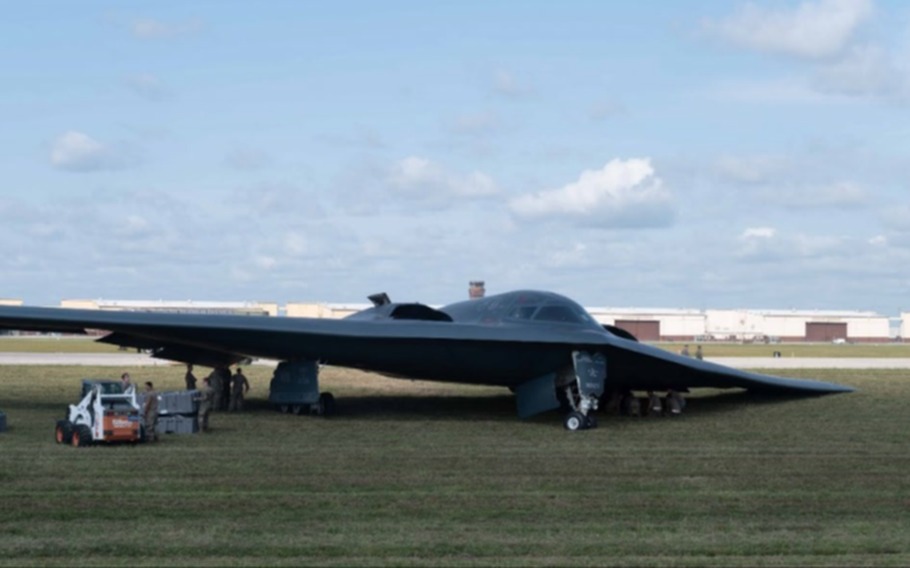
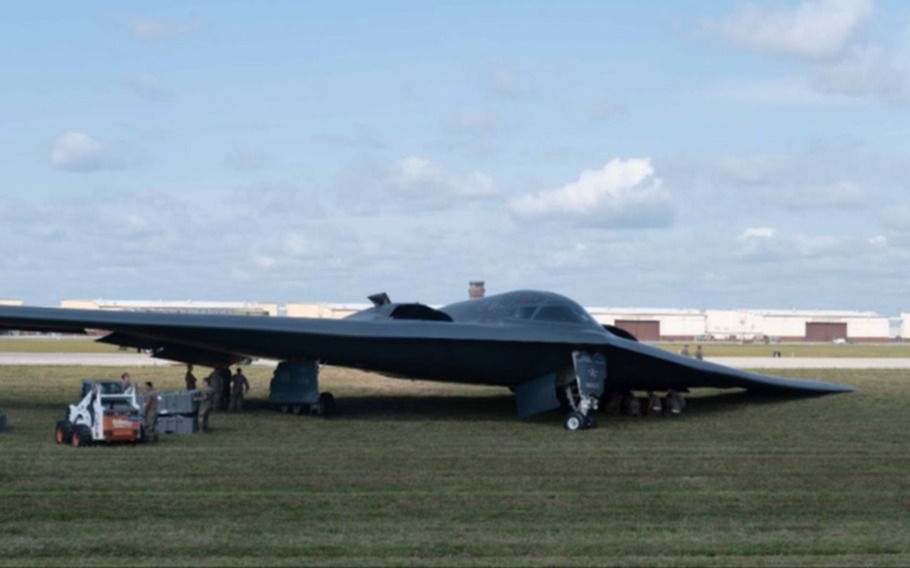
The Northrop Grumman B-2 Spirit is one of the world’s most advanced and recognizable military aircraft. Designed for long-range, stealth penetration missions, it remains a cornerstone of U.S. strategic deterrence.
In recent years, tensions in the Middle East, particularly with Iran’s nuclear program, have led analysts to revisit the potential role of the B-2 in hypothetical strike scenarios, given its ability to deliver large bunker-busting ordnance like the GBU-57 Massive Ordnance Penetrator (MOP).
Verified Sources:
- U.S. Air Force official fact sheet
- Al Jazeera – Alex Gatopoulos Explainer
- BBC News – Iran Nuclear Coverage
- Reuters – U.S. Military Capabilities
The B-2 Spirit: An Overview
First entering service in 1997, the B-2 Spirit is a heavy strategic b0mber featuring a flying wing design and radar-absorbing materials, giving it exceptional stealth characteristics.
- Crew: 2 pilots
- Range: Over 6,000 nautical miles (without refueling)
- Payload: Up to 40,000 pounds of conventional or nuclear weapons
Its stealth design reduces radar cross-section, allowing it to penetrate heavily defended airspace undetected—a critical advantage in any mission against fortified or high-threat targets.
Source: U.S. Air Force
Long-Range Global Strike Capability
A defining feature of the B-2 is its ability to deploy globally with aerial refueling. U.S. Air Force planners have regularly demonstrated intercontinental missions, with b0mbers launching from Whiteman Air Force Base in Missouri to theaters across Europe, Asia, and the Middle East.
For example, training missions sometimes exceed 30 hours round-trip, showcasing the aircraft’s endurance and the U.S. military’s ability to project power without forward-basing.
Source: U.S. Air Force Global Strike Command
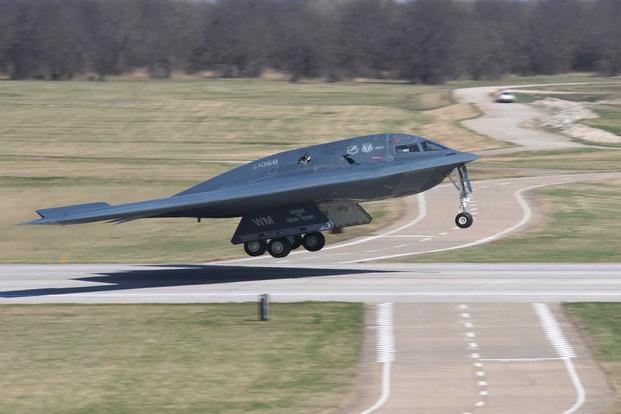
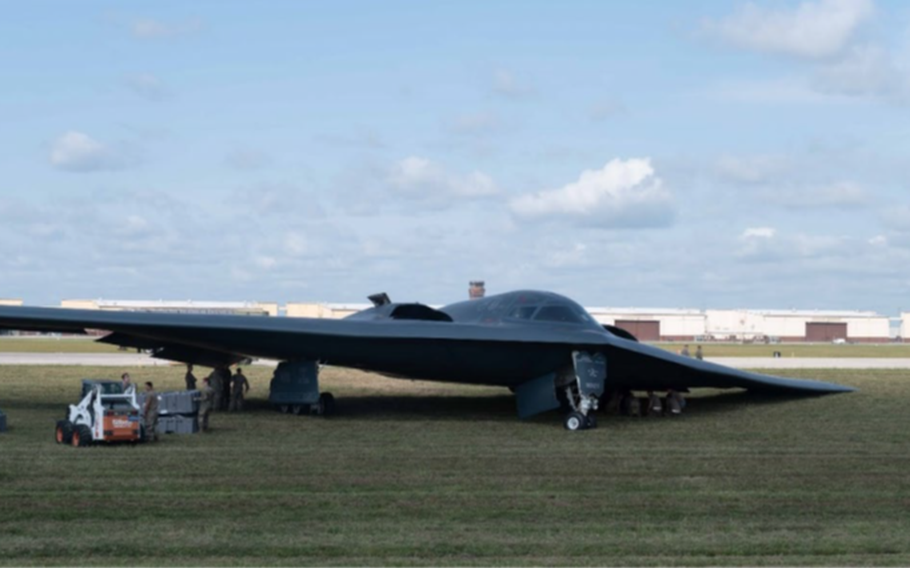
The GBU-57 Massive Ordnance Penetrator
The B-2 is certified to carry the GBU-57A/B Massive Ordnance Penetrator (MOP), one of the largest conventional b0mbs in the U.S. inventory:
- Weight: Approx. 13,600 kg (30,000 pounds)
- Penetration: Designed to punch through over 60 meters (200 feet) of reinforced concrete or rock before detonation
- Purpose: Neutralize deeply buried or fortified facilities, such as command bunkers or underground enrichment sites
Due to its size, each B-2 can carry two MOPs, making it the only U.S. platform currently capable of delivering this weapon in a single sortie.
Source: U.S. Defense Threat Reduction Agency | Al Jazeera
Strategic Use in Hypothetical Scenarios
Military analysts often cite the B-2’s ability to strike hardened underground targets as a deterrent in U.S. planning, especially concerning Iran’s nuclear facilities such as Fordow.
While Israel maintains advanced air forces and precision-guided munitions, some analysts note that Iran’s most fortified sites are designed to resist standard bunker-busters. The MOP’s exceptional penetration is intended to defeat such deep facilities.
Importantly, no official source confirms that B-2s have been used operationally against Iranian facilities to date. Such scenarios remain theoretical, used in defense planning and exercises.
Sources:
- BBC News
- Reuters
- Al Jazeera – Alex Gatopoulos Explainer
Air Refueling: Extending Global Reach
Another crucial capability of the B-2 is its reliance on mid-air refueling, typically via KC-135 Stratotanker or KC-46 Pegasus aircraft.
A typical long-range mission could involve:
- Multiple in-flight refuels
- Coordination with other assets for surveillance and electronic warfare
- Precise mission planning to avoid radar coverage and anti-air defenses
Such planning allows the U.S. Air Force to deploy B-2 b0mbers anywhere in the world within hours, reinforcing their strategic deterrent value.
Source: U.S. Air Force Fact Sheet
The Role of Stealth in Modern Warfare
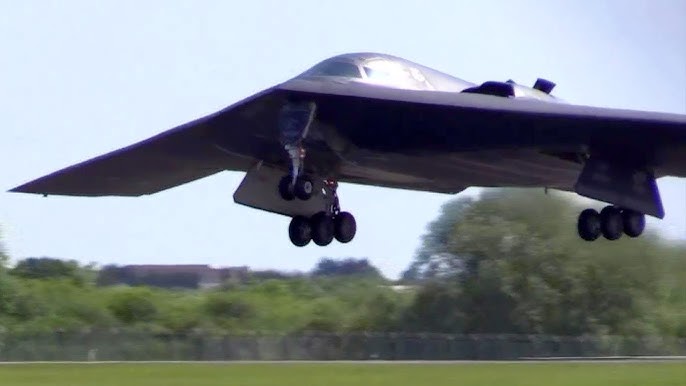
Stealth technology remains at the core of the B-2’s effectiveness. Its shape, radar-absorbing coatings, and mission planning enable it to avoid detection by most radar systems.
While advanced air defense systems continue to evolve, the B-2’s ability to penetrate contested airspace provides unique options for strategic planners, especially for striking high-value or time-sensitive targets.
Source: Defense.gov – U.S. Department of Defense
Modernization and the B-21 Raider
While the B-2 remains operational, the U.S. Air Force is developing the B-21 Raider—a next-generation stealth b0mber expected to enter service in the mid-2020s.
The B-21 will inherit and improve upon the B-2’s stealth and global strike capabilities, ensuring continued deterrence against hardened or defended targets.
But until then, the B-2 remains the world’s only operational platform capable of delivering the MOP.
Source: Northrop Grumman
Context: U.S.-Iran Tensions
Concerns about Iran’s nuclear program have led to extensive diplomatic and security planning over the years. While diplomatic negotiations continue under the Joint Comprehensive Plan of Action (JCPOA), Iran’s enrichment activities at sites like Fordow and Natanz have drawn international scrutiny.
Military planners consider options for contingency scenarios, but diplomatic channels remain the primary approach for addressing proliferation risks.
Sources:
- BBC News – Iran Nuclear Talks
- Reuters – Iran Nuclear Program
Al Jazeera’s Reporting on U.S. Strike Capabilities
In an explainer piece, Al Jazeera’s Alex Gatopoulos discussed the B-2’s potential role in striking fortified Iranian sites, describing how its ability to deploy the MOP represents a unique U.S. advantage.
The piece emphasized that such capabilities act as a deterrent, intended to discourage adversaries from pursuing hardened nuclear facilities immune to standard attacks.
Source: Al Jazeera
Conclusion: Strategic Deterrence in the 21st Century
The B-2 Spirit remains a critical asset in the U.S. Air Force’s global strike arsenal.
- Its stealth design ensures the ability to penetrate defended airspace.
- Its global reach enables rapid power projection.
- Its payload of Massive Ordnance Penetrators provides a unique capability against hardened targets.
While military analysts often discuss hypothetical scenarios involving Iran, there is no evidence of recent combat operations using the B-2 against Iranian facilities. Instead, its presence and capabilities serve as a powerful deterrent, underscoring the U.S. commitment to preventing nuclear proliferation through strength, readiness, and diplomatic engagement.
Verified Sources:
- U.S. Air Force
- Al Jazeera
- BBC News
- Reuters
- Northrop Grumman