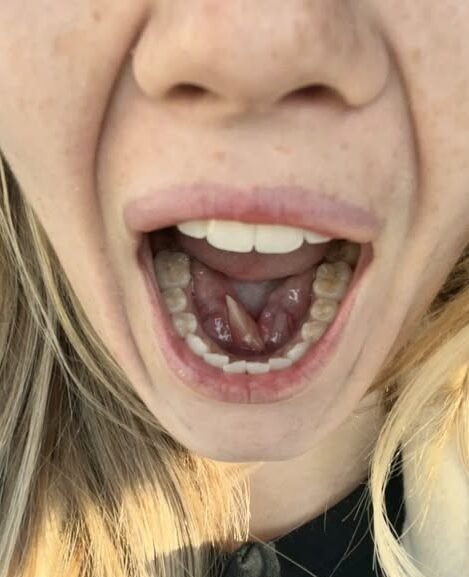
What is growing in my girlfriends mouth?
Noticing a bony or unusual growth inside the mouth can be alarming, especially when it appears suddenly or becomes noticeable when speaking or eating. In the image above, the growth under the tongue appears to be two symmetrical bony protrusions on the inner side of the lower jaw. While this can look frightening at first, dentists say this type of growth is often a benign condition called Torus Mandibularis.
Many people have this condition without realizing it, and in most cases it does not pose a serious health risk. However, understanding what it is and when to see a dentist is important.
What Is Torus Mandibularis?
Torus Mandibularis is a harmless bony growth that forms on the inner side of the lower jaw, usually underneath the tongue.
According to the Cleveland Clinic, these growths are:
-
Non-cancerous
-
Made of normal bone tissue
-
Often symmetrical on both sides of the jaw
-
Slow growing over time
Many people only notice them when:
-
Looking closely in a mirror
-
Visiting a dentist
-
Feeling the area with their tongue
Because they grow near the tongue, they can look dramatic in photos even though they are quite common in adults.
What Causes This Condition?
Doctors and dental experts are still studying the exact cause, but several factors may contribute.
Possible causes include:
Genetics
People with family members who have oral bone growths may be more likely to develop them.
Teeth Grinding or Jaw Stress
Excess pressure from clenching or grinding teeth can stimulate bone growth.
Diet and Bone Density
Some research suggests diets rich in calcium and minerals may influence bone development in the jaw.
Natural Bone Variation
In many cases, it simply occurs as a normal variation of jaw anatomy.
The National Institutes of Health notes that oral tori are relatively common and usually discovered during routine dental exams.
Symptoms People May Notice
Most people with Torus Mandibularis experience no symptoms at all. However, depending on size, some individuals may notice:
-
A hard lump under the tongue
-
Two bony bumps on the inner jaw
-
Difficulty fitting dentures
-
Mild irritation when eating certain foods
-
Occasional speech discomfort if the growth becomes large
The growth is usually very firm and covered by normal gum tissue.
When Should You See a Dentist?
Although this condition is typically harmless, it’s still important to have any new oral growth evaluated by a professional.
According to the American Dental Association, you should see a dentist if you notice:
 Rapid growth in the mouth Pain or bleeding from the lump Difficulty swallowing or speaking Ulcers forming over the area Sudden changes in size or shape
A dentist can usually diagnose this condition with a simple oral examination.
Do These Growths Need Treatment?
In most cases, no treatment is necessary.
Dentists typically recommend leaving the growth alone unless it causes problems.
Treatment may be considered if:
-
It interferes with dentures
-
It causes frequent irritation
-
It becomes very large
In rare cases, an oral surgeon may remove the extra bone through a minor surgical procedure.
Tips to Protect Your Oral Health
Even though Torus Mandibularis itself is harmless, maintaining good oral hygiene is still essential.
Dentists recommend:
 Brushing teeth twice daily
 Flossing regularly
 Eating a balanced diet rich in vitamins and minerals
 Avoiding tobacco products
 Visiting the dentist every 6 months
Healthy habits help prevent gum disease and other oral health issues that could irritate the area.
Key Takeaway
A hard growth under the tongue can look concerning, but many cases turn out to be Torus Mandibularis — a harmless bony growth in the lower jaw. These growths often develop slowly and usually don’t require treatment unless they cause discomfort or interfere with dental appliances.
If you or someone you know notices an unusual lump in the mouth, the best step is to have a dentist examine it to confirm the cause.
 Like if you found this helpful, and share this post to help others learn about unusual but harmless oral conditions!
Sources
-
Cleveland Clinic
-
National Institutes of Health
-
American Dental Association
-
Mayo Clinic