⚠️ Warning: These Are Clear Signs Your Blood Circulation Could Be in Crisis — What Doctors Want You to Notice Early! 🩺 Secret Symptoms Many People Ignore… See more…
Many health problems begin quietly. The body often sends small signals long before a serious condition develops. Unfortunately, many people ignore these signs until the situation becomes much more serious.
One of the most commonly overlooked warning areas of the body is the legs and feet. Changes in skin color, swelling, dryness, or unusual marks on the lower legs can sometimes signal that something deeper may be happening inside the body.
Doctors often say that your legs can reveal important clues about your circulation and overall health. When blood flow is healthy, the skin usually appears even in tone, warm, and well nourished. But when circulation begins to struggle, the body may show visible changes.
Let’s explore some of the warning signs that medical professionals often encourage people to pay attention to.
1. Unusual Skin Discoloration
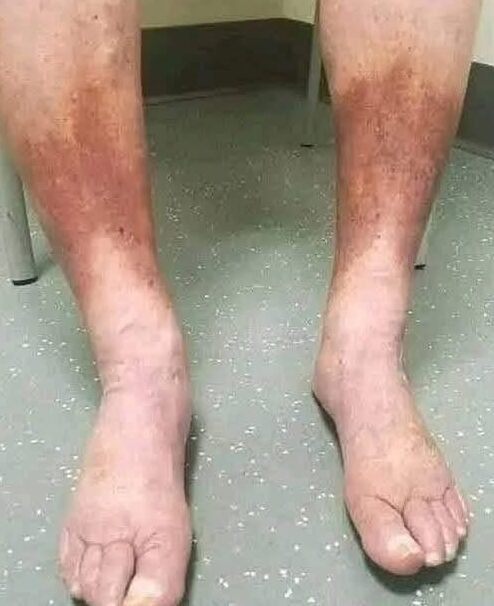
One of the most noticeable signs people report is dark or reddish-brown discoloration around the lower legs and ankles. This may happen gradually, and many individuals assume it is simply aging or dry skin.
However, medical professionals sometimes associate these types of changes with circulatory problems in the veins, where blood has difficulty moving efficiently back toward the heart.
When blood flow slows down, pressure can build in the small blood vessels. Over time, this may cause pigments from the blood to leak into surrounding tissues, creating darker patches on the skin.
While discoloration does not automatically mean a serious condition, persistent or spreading changes should always be evaluated by a healthcare professional.
2. Swelling in the Ankles and Feet
Another signal many people experience is swelling in the lower legs, especially near the ankles.
This swelling, sometimes called fluid retention, can happen for many reasons. Sitting or standing for long periods can cause it temporarily. However, frequent swelling that doesn’t improve with rest may sometimes indicate circulation issues.
When veins struggle to move blood upward against gravity, fluid may accumulate in surrounding tissues. This can lead to puffiness, tight skin, or shoes feeling suddenly uncomfortable.
Doctors often recommend paying attention to swelling that:
-
Happens frequently
-
Appears on both legs
-
Worsens by the end of the day
-
Leaves marks when pressed
These patterns can provide useful clues about what might be happening internally.
Healthy circulation helps deliver oxygen and nutrients to the skin. When that supply becomes limited, the skin may begin to change in texture.
Some people notice that the lower legs become:
-
Very dry
-
Thin or shiny
-
Easily irritated
-
Slow to heal after minor cuts
Because the skin on the legs is far from the heart, it can sometimes be the first place where circulation-related changes appear.
This doesn’t always mean something serious, but persistent changes should be taken seriously.
4. A Feeling of Heaviness or Aching
Many people describe a heavy, tired sensation in the legs, especially after standing or walking for long periods.
This discomfort may improve when the legs are elevated or when the person rests.
Doctors sometimes explain that when veins are not moving blood efficiently, pressure can build in the legs, creating that heavy feeling.
Other sensations some people report include:
-
Mild throbbing
-
Tingling
-
Burning
-
Restless legs at night
These symptoms can have many causes, so proper medical evaluation is always important.
5. Slow Healing Wounds
One of the more concerning signs doctors often mention is wounds or sores that take a long time to heal.
Healthy circulation allows the body to deliver infection-fighting cells and nutrients to damaged tissue. When blood flow is reduced, healing can become slower.
Even small cuts or scratches on the lower legs and feet should normally heal within a reasonable amount of time. If wounds remain open or frequently return, it may be a signal worth discussing with a healthcare professional.
Why These Signs Are Often Ignored
Many people ignore early warning signs for a simple reason: they do not cause immediate pain.
Discoloration, mild swelling, or dry skin may seem cosmetic rather than medical. As a result, individuals may delay seeking advice for months or even years.
But doctors often emphasize that early attention can prevent more complicated problems later.
The body rarely changes without a reason. Paying attention to these signals can help people address health concerns before they become more serious.
Simple Habits That Support Healthy Circulation
While medical evaluation is important for concerning symptoms, there are also everyday habits that support good circulation.
Health professionals often recommend:
Regular movement
Walking, stretching, and avoiding long periods of sitting help keep blood flowing through the legs.
Elevating the legs occasionally
Raising the legs above heart level for short periods can help reduce pressure in the veins.
Maintaining a healthy weight
Excess weight can increase pressure on the circulatory system.
Staying hydrated
Proper hydration helps the body maintain healthy blood flow.
Wearing comfortable footwear
Tight shoes or clothing can restrict circulation in some cases.
When to Talk to a Doctor
It’s always best to seek medical advice if you notice:
-
Persistent discoloration
-
Frequent swelling in the legs
-
Skin changes that worsen over time
-
Unusual pain or heaviness in the legs
-
Wounds that heal slowly
A healthcare professional can evaluate symptoms, ask about lifestyle factors, and determine whether further testing is needed.